
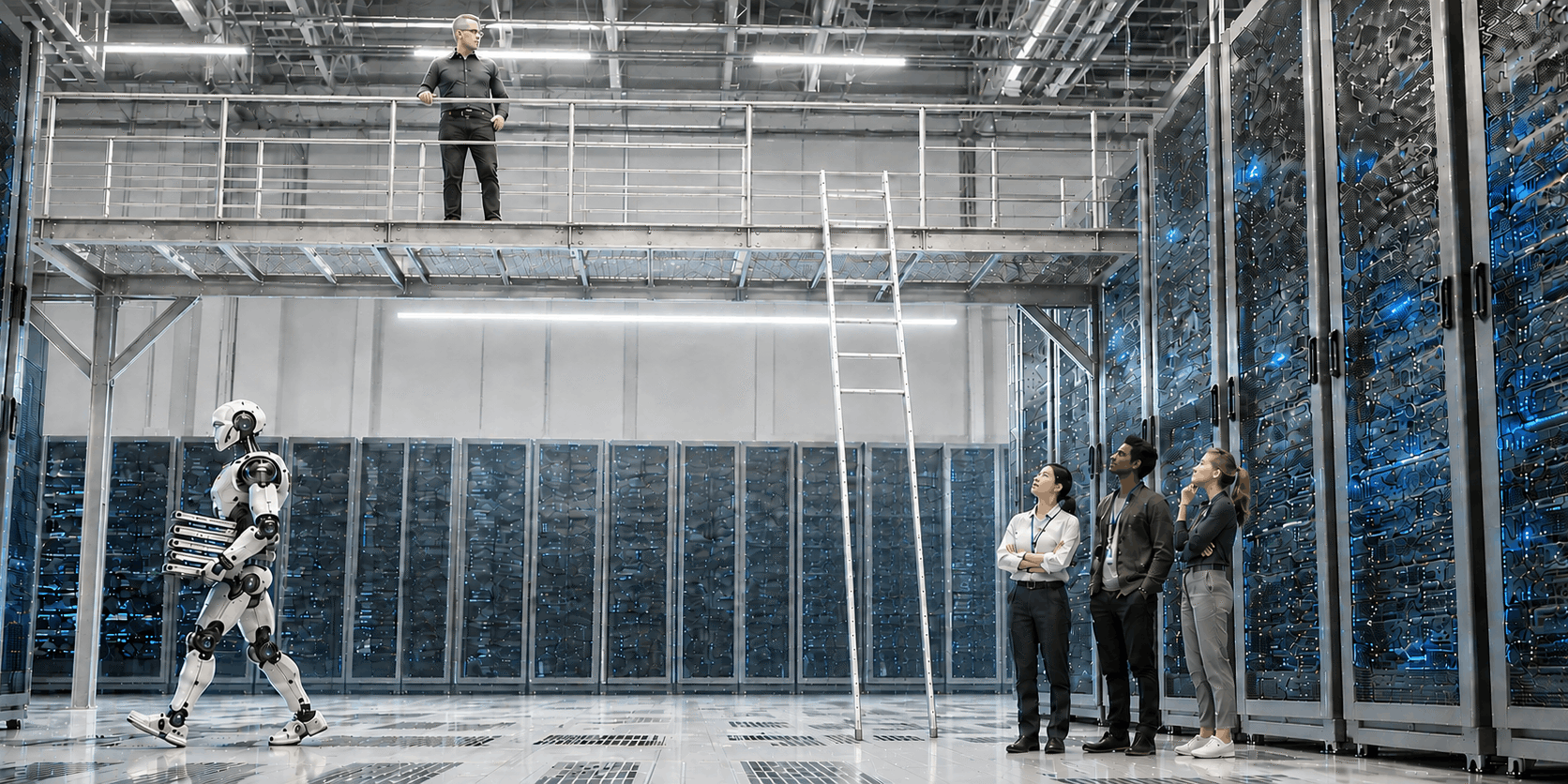
Where Will Tomorrow’s IT Experts Come From If AI Replaces the Help Desk?
Published 22 September 2026
The help desk has never been the most glamorous corner of IT. When the Brits created The IT Crowd, a sitcom about an IT support team, much of the joke was that nobody understood or respected the people keeping the company’s technology running.
Yet the help desk has traditionally performed a much bigger job than its name suggests. For many, it’s been a rite of passage.
For decades, entry-level trainees learned IT by solving small problems for real people. They discovered how systems behave outside a college classroom and how one innocent change can upset three other applications.
Now AI is beginning to handle more of that routine work. It can classify tickets, draft replies, search knowledge bases, summarize incidents and guide users through common fixes. Similar changes are reaching software testing, data analysis and basic coding. The immediate attraction is obvious: quicker responses, lower costs and fewer tedious tasks for human staff.
But it raises one vital, if slightly awkward, question. If AI takes over the work that turns beginners into competent mid-level IT pros, many of whom go on to become IT managers, where will our experienced IT people come from in the not-too-distant future?
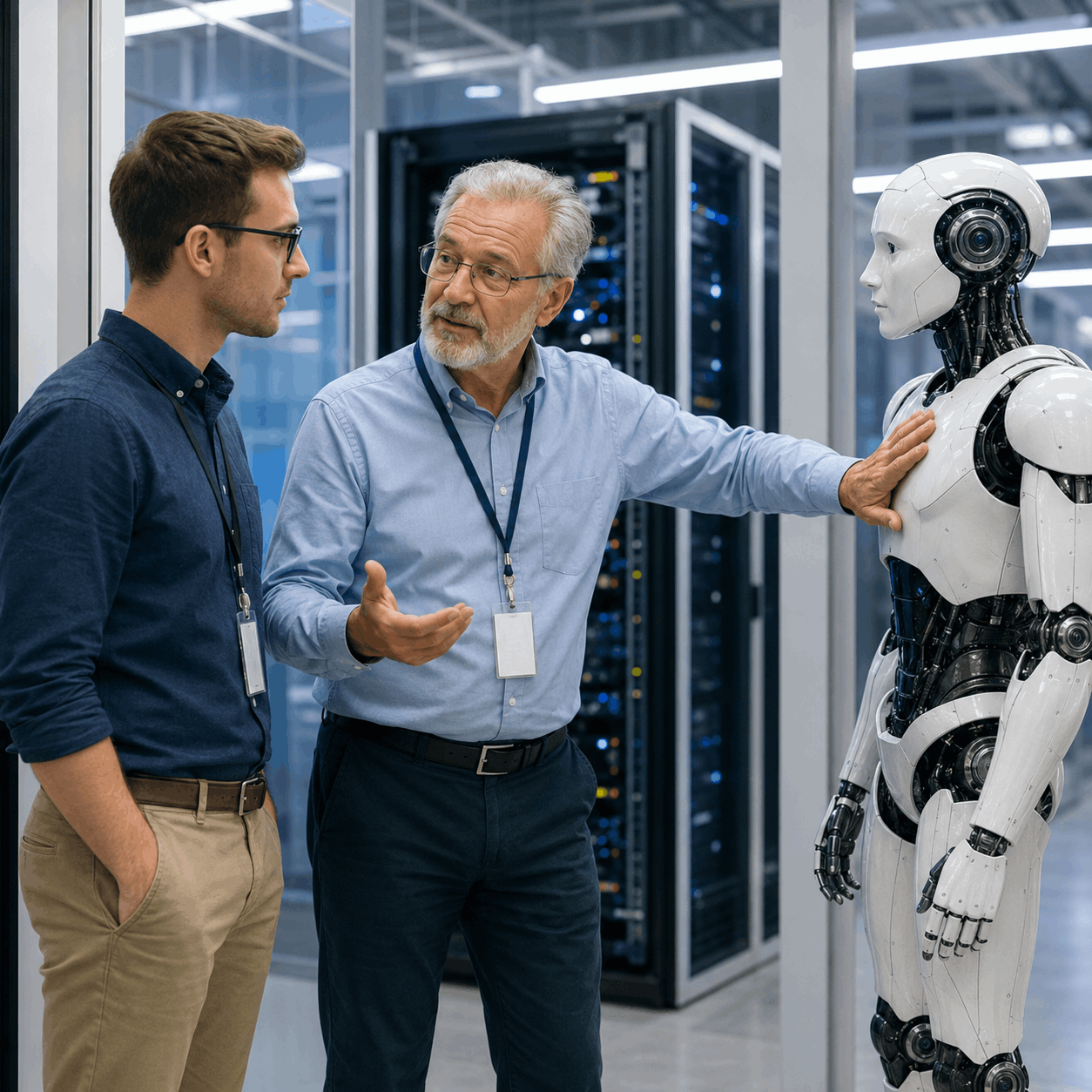
From time to time, we need to pause our AI interaction and remember to invest in the next generation of human IT staff.
AI Isn’t Simply Removing Jobs
The concern isn’t merely that a robot will arrive one Monday and occupy the junior technician’s chair.
In April 2026, technology-training nonprofit NPower and workforce research organization the Burning Glass Institute published a study of early-career technology pathways in the age of AI. The researchers mapped 52 entry-level tech job titles and more than 500 skills across several industries.
They captured their conclusion in a memorable phrase: “AI is pulling up the ladder.”
The study identified Help Desk Associate as one of the roles with the highest AI exposure, alongside Data Analyst, Business Analyst and Clinical Data Entry Operator. The tasks most vulnerable to automation include the very tasks that once gave new employees their first opportunities to build skills, demonstrate judgment and earn greater responsibility.

Hiring experienced IT staff could rapidly become a game of musical chairs.
The report doesn’t claim that employers have already replaced junior IT staff wholesale. In employer discussions, participants said companies were still working out what AI could reliably do. But many were hedging against uncertainty by favoring experienced hires and contractors. At the same time, early-career applicants were increasingly expected to arrive with two or three years of experience (an interesting trend).
That produces a classic entry-level-job riddle: Experience required, but nowhere to acquire it. For certain positions (including, it seems, first-line Help Desk), AI could turn that old frustration into a structural problem.
The Ticket Was Never Just a Ticket
Basic-level help desk tasks, such as a password reset, are easy to dismiss as low-value work. They’re not. First, even easy, routine tasks are often quite important (for reasons so obvious that they don’t bear mentioning). But I will mention one reason that has been overlooked:
Routine tickets teach more than the steps needed to close them.
A new help desk teammate learns how identity systems, permissions, endpoints and business applications connect. They learn which questions uncover the real problem and which technically correct explanations will bewilder the person who called. They begin to recognize patterns across incidents. Most importantly, they learn when a familiar-looking problem isn’t familiar at all.
That knowledge accumulates quietly.
The technician who starts by handling locked accounts may later notice that several lockouts share an unusual source. The junior analyst who checks routine alerts may become the security specialist who recognizes the early signs of a coordinated attack. The support employee who repeatedly sees links fail after file moves may eventually spearhead a more efficient migration process.
AI can often provide an answer. But experience includes knowing when that answer shouldn’t be trusted.
Remove the routine work and you don’t merely remove the drudgery. You risk losing the repetition, context and low-risk mistakes that help develop professional judgment.
AI can often provide an answer. But experience includes knowing when that answer shouldn’t be trusted. It also includes knowing what to ask AI in the first place and how to ask it.
The Long-Term Cost of Short-Term Efficiency
Five years down the line, the calculation may look very different when the company needs a senior technician and discovers that experienced candidates are rarer than hen’s teeth.
For an MSP, the case for automating first-line support can be persuasive. Clients want rapid resolution. Margins are tight. Experienced staff don’t want to spend their days answering questions a well-designed system can resolve in seconds.
If an AI assistant allows ten people to handle the workload that once required twelve, this quarter’s numbers may look better. But five years down the line, the calculation may look very different when the company needs a senior technician and discovers that experienced candidates are rarer than hen’s teeth.
It’s a pipeline problem. Every senior engineer, consultant or IT manager, including you and me, was once inexperienced. Organizations that stop hiring beginners may eventually compete for a shrinking (read: expensive) pool of qualified people.
The effects could be especially sharp for MSPs. Their work exposes employees to many environments, industries and unexpected combinations of technology. That breadth can turn a promising junior technician into an unusually capable troubleshooter. If early-career roles disappear, MSPs may lose one of their most effective ways to cultivate people who can handle unfamiliar systems under pressure.
The effects could be especially sharp for MSPs.
Hiring only experienced staff isn’t a workable strategy if every company adopts it. It literally turns into a game of musical chairs — with fewer chairs each year.
There’s More Than One Way Up
The report suggests that the traditional career ladder is becoming a “career lattice.” Workers may need to make lateral or diagonal moves into areas such as cybersecurity, compliance and AI governance.
That could create valuable opportunities. A junior technician might use AI to assemble diagnostic information, then work with a senior colleague to interpret it. A new analyst might review AI-generated findings instead of spending hours producing a basic report.
But a lattice isn't automatically easier to climb. Without deliberate training, it can become a maze.
Junior employees need to gain enough domain knowledge so that they can accurately judge AI output now and in the future when they are senior-level employees. They need access to experienced people who can explain why an answer is incomplete, risky or simply wrong. They also need assignments that increase in difficulty, not just a stream of AI-policing chores detached from the systems they’re supposed to understand.
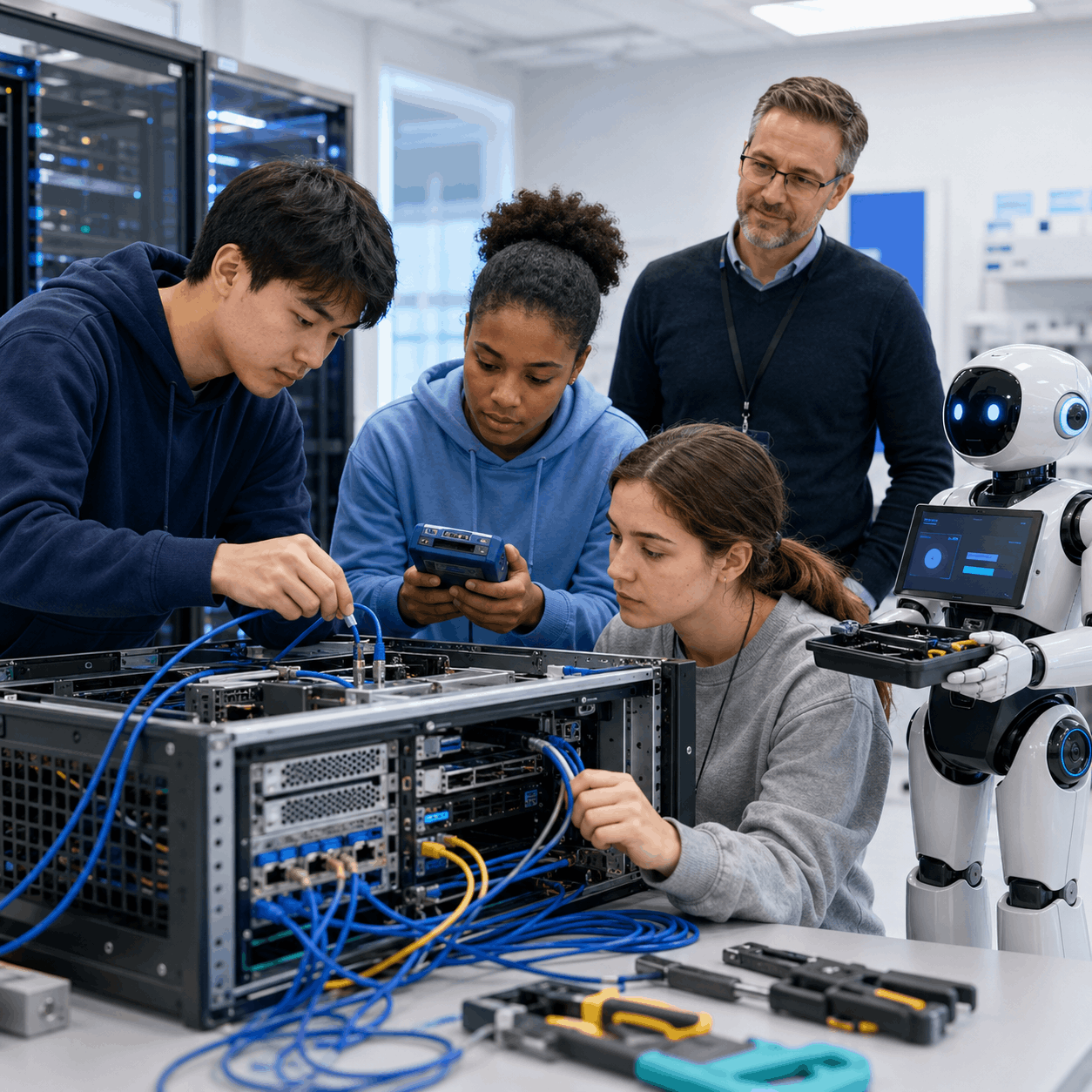
Tomorrow’s experts need to start learning today.
It’s crucial that we redesign the entry-level role, not simplistically reduce it.
Let AI Handle Tasks Without Owning the Education
It’s crucial that we redesign the entry-level role, not simplistically reduce it.
I’m not suggesting that IT organizations preserve inefficient work as a historical monument. Nobody benefits from making a junior employee manually perform a task 300 times because that’s how the senior team learned — thirty years ago.
The better answer is to separate automation from development. Automate the task where it makes sense, then intentionally replace the learning that disappears.
For example, an MSP could let an AI system draft responses to common tickets while requiring junior technicians to review a sample, identify the underlying cause and explain when the proposed fix would be unsafe. New employees could shadow escalations, participate in incident reviews and take controlled responsibility for increasingly complex cases. Teams could use simulations, lab environments and carefully designed capstone projects to recreate experience without gambling on a client’s live systems.
Apprenticeships may also become more important. The NPower research examined 30 registered technology apprenticeships and argues that programs should concentrate on judgment, interpretation, collaboration and domain expertise. These are skills AI can augment, but can’t simply confer upon someone who has never encountered the underlying work.
Managers should also examine what their automation metrics fail to show. Ticket-resolution time matters, but so do promotion rates, mentorship capacity, skills growth and the number of employees becoming capable of handling escalations. A support operation can automate its way to a faster present while quietly weakening its future workforce.
The Senior Staff Need Time To Teach
Apprenticeship requires experts who are available to answer questions, review decisions and let less experienced colleagues attempt meaningful work.
Many organizations have spent years making teams leaner. Senior employees carry heavy caseloads and middle-management layers have thinned. AI is often introduced partly to relieve that pressure, but any saved time can quickly be swallowed by additional output targets.
If every efficiency gain simply becomes yet more work, nobody gains time to teach.
Organizations may need to treat mentoring as productive work rather than an extra performed between urgent requests. That means scheduling it, measuring it and recognizing the people who do it well. A junior employee may take longer on a problem because the goal isn’t only to close today’s ticket. It’s to build someone who can solve tomorrow’s crisis.
This requires patience in a business culture that worships speed. It also requires accepting that today’s perfectly efficient department can become dangerously brittle tomorrow.
Tomorrow’s Experts Are Already at Work … If We Let Them Learn
AI can spare talented people from repetitive work, give technicians quicker access to knowledge and help small teams provide better service. Refusing those benefits would make little sense.
But companies and organizations would be wise to remain mindful of what routine work has been doing for them. It hasn’t merely consumed labor. It’s created experience.
The challenge is to retain that learning while changing the work. Junior employees need supervised contact with real systems, real users and real consequences. They need opportunities to question AI, catch it making mistakes and understand why the tempting answer is sometimes the wrong one. They need experienced colleagues to guide them into higher-value work before automation seals off the entrance.
For IT managers and MSP owners, the decision isn’t simply how many help desk tasks AI can absorb. It’s how the organization will produce capable technicians, consultants and leaders after those tasks are gone.
The ladder doesn’t have to disappear. “Out with the old, in with the new” may work for obsolete tools, but it’s a dangerous rule for the pathways that create expertise. If AI is pulling up the lowest rungs, somebody has to build a new way up. And “somebody” is you and me.
If AI is pulling up the lowest rungs, somebody has to build a new way up. And “somebody” is you and me.
By Ed Clark

LinkTek COO
Ed Clark

Feel free to share this article on your social media:
Recent Comments
- No recent comments available.


 ChatGPT,
 Gemini,
 Claude and
 Copilot
Leave a Comment