

IT Tips & Tricks
Data Migration Strategies: Full vs. Incremental (and Where Lift-and-Shift Fits In)
Published 10 December 2025
Do you call a carbonated sweet drink a soda, pop, coke, cold drink or soda pop? The answer depends on where you’re from, and, surprisingly, migration terminology is similar. In IT, there are multiple terms to describe closely related ideas, which can make things confusing.
Before diving into the details, I thought I’d clarify the terminology. Then I’ll get to the interesting (often surprising) stuff that will help you plan and conduct your large-scale data migration.
Every migration plan can be viewed through two lenses: 1) the strategy, whether data moves all at once or in stages, and 2) the method — how much modernization happens along the way.
Moving too slowly can sometimes create more risk.
The tables below define these approaches and outline what may make one approach more applicable than the other for you.
Migration Strategies
| Type | Definition | When to Use |
| Full, Complete or Big Bang Migration | Moves all selected workloads or systems to the new environment in one coordinated event. Typically uses bulk copy operations or snapshot replication. Offers the fastest completion but carries higher risk of downtime and user disruption. | Best for small or moderately sized environments with predictable data sets and strong rollback planning. |
| Incremental Migration (often referred to as Phased, Trickle, or Batch Migration) | Migrates data in stages, often by department, project or file type. Each phase is completed and stabilized before the next begins. Commonly uses delta synchronization or scheduled batches to limit disruption. | Ideal for large, complex or high-availability environments that need ongoing testing and reduced risk. |
Migration Methods
| Method | What Happens? |
| Lift-and-Shift | Move files “as-is” (same folder paths, names, permissions). Fast and low risk, but doesn’t improve structure, metadata or links. |
| Re-platforming | Slight adjustments — reorganizing folder hierarchies, updating permissions, cleaning obsolete data or converting formats (such as from shared drives to SharePoint libraries). |
| Refactoring | Major restructuring — redefining taxonomy, metadata or workflows (such as turning legacy file shares into structured SharePoint sites or Teams channels). High effort but adds long-term value. |
What About “Hybrid Migration”?
“Hybrid migration” is not really a migration method nor a migration strategy. It’s an outcome. It describes a mixed end state: an environment in which some data is on-premise and other data is in the cloud.
Moving large volumes of data at once may strain network or system resources.
Note: Sometimes people use the term “hybrid migration” just to mean that they are migrating a portion of their data (rather than all of it). But even in such cases, they will still have to use one of the above strategies and one of the above methods on whatever data they are migrating.
With the general definitions and guidelines in place, let’s move on to the specifics you need to know.
All-In or Easy Does It?
Choosing the right migration path isn’t only about tools. It’s about people, timing and how much risk your organization can handle.
Should you move everything at once, or take it step by step?
Here’s the surprising truth: Moving too slowly can sometimes create more risk, such as overlapping systems, confused users and delays that slow down the migration.
Your strategy matters. Each path has trade-offs. The goal isn’t perfection. It’s clarity, control and, above all, avoiding preventable pain such as data loss, downtime, frustrated users and unhappy managers.
Let’s Dig Into Full Migration
As the name implies, a full migration moves all selected data — documents, folders, permissions, metadata and internal links — from your existing environment (such as on-premises systems, legacy SharePoint or file shares) to a new target platform (such as SharePoint Online) in a single, all-inclusive push.
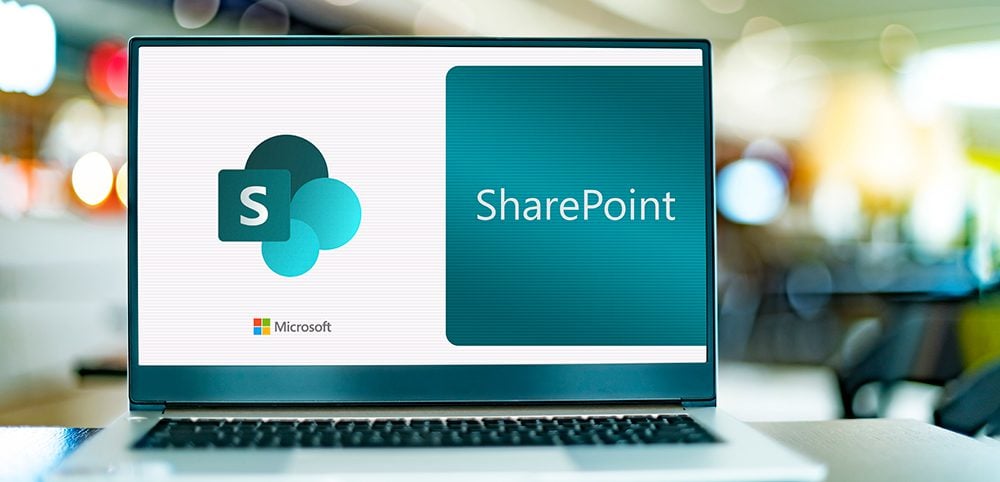
SharePoint Online is a popular choice, but what’s the best way to get there?
This typically involves snapshot replication or bulk copy operations (using tools such as Microsoft Migration Manager) and LinkFixer Advanced for link remediation.
Pros
- Faster overall completion: Moves everything at once without waiting for multiple phases (assuming no major issues arise).
- Clear cutover date: Easier to communicate to users and plan training or change management.
- Simpler rollback: If something goes wrong, restoring the previous environment is straightforward.
- Consistent environment from day one: Everyone accesses the same updated system immediately, reducing confusion from split platforms.
- Single migration effort: Avoids repeated setup, testing and coordination across multiple phases.
- Easier reporting and auditing: One big move simplifies tracking of what was migrated and when.
Links break silently, creating hidden data loss that frustrates users and wastes valuable time.
Cons
- Higher risk of disruption: If something goes wrong, it can affect all users at once.
- Greater pressure on support teams: Helpdesk and IT may be overwhelmed during cutover.
- Less flexibility: No opportunity to adjust the process based on lessons learned from an initial phase.
- Potential performance issues: Moving large volumes of data at once may strain network or system resources.
- Change management challenges: Users may feel overwhelmed by a big, sudden shift in tools or workflows.
- Rollback complexity for large datasets: While theoretically simple, reverting a huge migration can still be time-consuming.
- High risk of data loss due to broken links: Moving everything at once means that unprotected internal links, shortcuts or embedded references all break at once if not protected.
The Highs and Lows of Incremental Migration
An incremental migration moves content in stages, often by department, project, file type or date. It typically includes periodic synchronizations that update only new or changed data, allowing users to continue working in the source environment during the migration.
Pros
- Minimal user disruption: Most users can keep working while migration happens in the background.
- Easier testing and issue resolution: Problems can be identified and fixed during early phases before affecting the entire environment.

If uninterrupted productivity is a necessity, choosing the right migration style is essential.
- Better change management: Smaller, staged migrations are easier for users to adapt to.
- Lower immediate pressure on support teams: IT and helpdesk can handle smaller groups at a time.
- Reduced risk of data loss per phase: Issues (such as broken links) can be isolated and corrected before moving the next batch of data.
- Ideal for complex or hybrid environments: Works well when multiple systems, sites or storage types are involved.
Cons
- Longer total timeline: Migrating in stages takes more calendar time.
- More coordination required: Planning, tracking and scheduling multiple phases can be complex.
- Risk of version control or link inconsistencies: Overlapping updates across phases may create confusion or broken references.
- Potential link integrity issues: Internal links break when content is migrated.
- Multiple cutovers: Repeated change events can frustrate users if not communicated clearly.
- More administrative overhead: Repeated validation, testing and reporting across phases increases workload.
Link Integrity: The Hidden Vulnerability in Both Approaches

Have you ever considered the delicate network of linked files that is embedded in your data, and the impact of a migration?
No matter which migration path you choose, unprotected internal links are highly vulnerable whenever file paths change. And with any data move, they always change.
Common casualties include:
- Excel spreadsheets referencing other files.
- Word documents with embedded links.
- Shortcut files or UNC paths across shared drives.
Once those paths change, links silently break, creating hidden data loss that frustrates users and wastes valuable time.
How to Prevent It:
Use LinkFixer Advanced to detect, repair and proactively safeguard links before your migration. Protecting links upfront is the single most effective way to minimize disruption, prevent hidden data loss and keep users productive.
Which Strategy Fits Best?
Here’s a quick comparison to give you an at-a-glance overview:
| Criteria | Full Migration | Incremental Migration |
| Speed | Fastest overall. Executed in a single move. | Slower. Executed in a phased or staged approach. |
| Downtime | Higher risk if issues occur. | Lower risk of widespread downtime. Ongoing data availability. |
| User Disruption | Greater disruption during cutover. | Lower disruption risk. Users can continue working. |
| Testing | Limited to pre-migration checks. | Continuous testing is possible between phases. |
| Link Integrity Risk | High. All unprotected links break at once. | High. Staged moves merely mean that unprotected links break in batches. |
| Best For | Smaller or simpler datasets suited to straightforward migration. | Larger, complex or hybrid environments. |
Pro Tip: Many organizations start with a pilot migration — testing tools, discovering link risks and refining their process — before performing a full cutover. This approach blends the safety of incremental migration with the speed of a full migration.
A Considered Migration Is a Successful One
Migrations are as much about people as technology. Downtime, broken links and data loss can cause frustration, lost productivity and even compliance issues.
Plan thoroughly, communicate clearly and never treat link integrity as an afterthought.
This approach blends the safety of incremental migration with the speed of a full migration.
LinkFixer Advanced helps protect your linked data, ensuring a smoother transition by detecting, repairing or proactively safeguarding links — saving hours of rework and unnecessary frustration.
Ready to protect your file links during your SharePoint migration?

The blissful relief of getting through a migration without link-related data loss? It’s real!
I highly recommend scheduling a demo or requesting a free trial of LinkFixer Advanced so that you can see, firsthand, how effective it is. Have questions? Chat with us online or call a LinkTek consultant at 727-442-1822 today.
Whatever migration path you choose, full or incremental, the most successful migration is the one that protects your data every step of the way.
By Ed Clark

Ed Clark
LinkTek COO

Feel free to share this article on your social media:
Recent Comments
- No recent comments available.


 ChatGPT,
 Gemini,
 Claude and
 Copilot
Leave a Comment