

Cloud Migration: The Breakup Letter to Your Legacy System
Published 29 May 2026
Sometimes, there comes a moment in a long-term relationship when you realize … it’s just not working anymore.
The late nights. The constant patching. The escalating costs. The feeling that no matter how much effort you pour in, your legacy system just can’t keep up with modern demands.
If this sounds familiar, you’re not alone. In fact, by 2025, over 94% of organizations were already using some element of cloud infrastructure, and, according to DuploCloud, around 85% are transitioning toward a cloud-first strategy.
You’re costing us more than you’re giving back.
For most, the question isn’t whether to move on — that’s pretty much a given at this point. It’s how to do it gracefully, strategically and without losing your data (or your sanity).
Think of cloud migration as the impetus behind the breakup letter you have to write to your legacy system. The letter needn’t be abrupt, nor reckless or mean. The letter can be thoughtful and honest. It’s just become painfully obvious that it’s, well … necessary.
Dear Legacy System, We Need to Talk
You’ve been reliable, dear legacy system. Loyal, even. You handled workloads when floppy disks were still a thing. You survived mergers, audits and more than a few “temporary” workarounds that became permanent. But here’s the truth: You’re costing us more than you’re giving back.
Many organizations still spend a significant portion of their IT budgets maintaining aging infrastructure rather than innovating. According to Webelight, some estimates suggest that up to 40% of IT budgets are tied up in maintaining technical debt. That’s not just inefficient, it’s limiting.
And while you’ve done your best, the world has changed. Today’s business environment demands:
- Real-time data access.
- Scalable infrastructure.
- AI-ready platforms.
- Secure, compliant architectures.
It’s not your fault, but you weren’t built for this. And that’s okay.
The Emotional Baggage of Legacy Systems
Legacy systems don’t just slow you down — they potentially create risk.
Breaking up is hard, especially when your systems are deeply embedded in your operations. Legacy environments often carry:
- Hidden Dependencies: That one app that nobody understands, but everyone depends on? Yes, that one.
- Integration Nightmares: Modern APIs trying to talk to decades-old architecture often result in “creative” yet non-standard and sometimes unstable workarounds.
- Security Risks: Older systems simply weren’t designed for today’s threat landscape, making them vulnerable despite your best efforts.
- Data Chaos: With over 80% of enterprise data now unstructured, traditional systems struggle to classify and manage it effectively, says TechRadar.
In short, legacy systems don’t just slow you down — they potentially create risk.
Why the Cloud Is the Right Next Chapter
Cloud migration isn’t just a technical upgrade. It’s a strategic shift that redefines how organizations operate, innovate and compete. It’s about more than mere elasticity or cost optimization. The cloud turns IT into a living audit of how adaptable your enterprise truly is. For many IT managers, the surprising lesson is this: The cloud doesn’t just modernize infrastructure, it modernizes accountability.
Organizations that move to the cloud often see 20–30% cost savings, along with improved performance and scalability. But the real value goes deeper.
- Agility That Matches Business Speed: Cloud-native environments allow teams to deploy updates faster, test more efficiently and respond to market changes in real time.
- Built-In Scalability: No more guessing capacity. Scale up or down based on demand, with no hardware procurement delays required.
- Enhanced Security & Compliance: Most modern cloud platforms integrate encryption, monitoring and compliance frameworks by design.
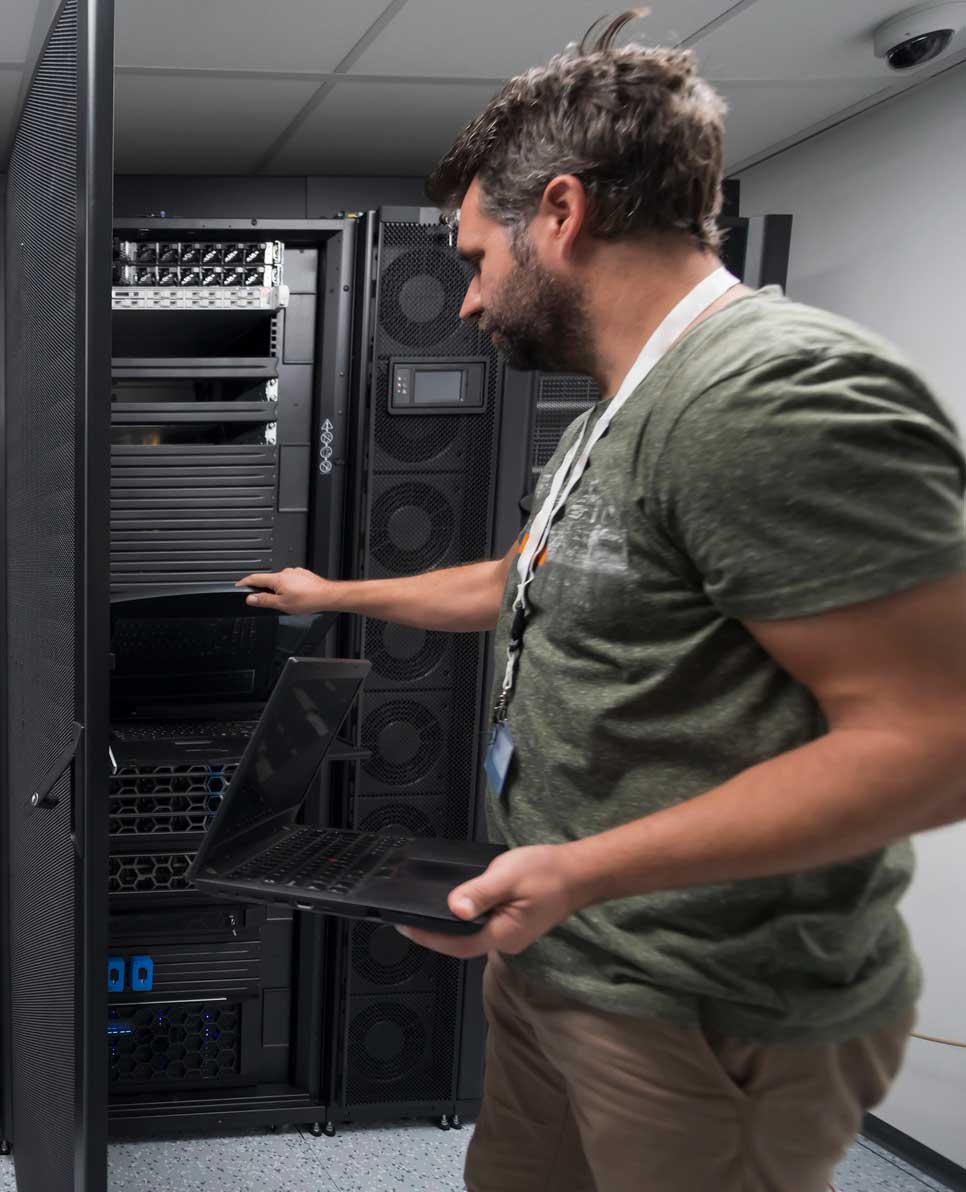
Server maintenance and repairs are someone else’s problem once you’re in the cloud.
- Innovation Enablement: AI, analytics and automation thrive in cloud environments. Legacy systems? Not so much.
The Problem With “Just Lift and Shift”
Here’s where many breakups go wrong. Simply moving your legacy systems to the cloud without rethinking them is like moving in together after a breakup. You’re stuck with the same problems, just at a new address.
You’re stuck with the same problems, just at a new address.
Each workload deserves its own decision path. The goal isn’t just relocation. It’s transformation.
The Data Migration Plot Twist
Let’s talk about the real challenge: The data itself.
Applications can be rebuilt. Infrastructure can be redesigned. But data? That’s your institutional memory … and it can be messy. Between duplicates, broken links and inconsistent metadata, the actual cutover often becomes the most complex part of the journey.
This is where intelligent data restructuring — not just moving it — becomes critical.
LinkFixer Advanced (yes, worth a look) is designed to preserve relationships within data, ensuring links remain intact during migration and preventing link-related data loss. Nothing ruins a “successful” migration faster than realizing your data arrived … but the users are freaking out, data is missing, the execs are not happy and the whole exercise starts feeling pointless.
Note: Leaving some data behind is one risk that can happen in any large-scale migration, but it’s not the most common way data goes missing. Much more common is that the data exists (somewhere) in your new cloud platform but is not being accessed by all the files that rely on it, making it almost as useless as if it didn’t exist at all. For more on this, see Maintain Data Integrity During Migration: The Smart Way to Reduce Data Loss.
The Eight Stages of a Healthy Breakup
Breaking up with your legacy system is never easy and a successful cloud migration isn’t impulsive. It’s methodical. But as with most relationships, closure comes in stages, and skipping one leaves you with baggage. Here’s how to move on gracefully:
- Assessment. Now is the time to confront the truth. You can’t move forward until you admit what’s really there. Inventory every workload, dependency and hidden connection. This is the “we need to talk” moment.
Not every breakup needs to be total. Sometimes, you can stay friends.
- Data Hygiene. Next, it’s time to clean up the mess. Don’t drag old clutter into your new life. Scrub, normalize and deduplicate your data. Think of it as tidying up before you pack.
- Backup & Test. In this phase, it’s all about protecting your data. Safeguard what matters. Back up everything and test those backups. It’s like keeping copies of the photos before you delete them from your phone.
- Pilot Migration. Before you commit, test the waters. No one rebounds with a full commitment. Start small. A pilot migration is your “casual dating” phase, with low risk and high insight.
- Migration. The day of the big move arrives. It’s time to go all in. If you are doing your migration in stages (usually a good idea), it’s the start of going all in. Shift workloads, automate where possible and monitor closely. This is the actual breakup. Whether gradual or all in one shot, the end result is you’ve packed and left and moved into a new place.
- Post-Migration Validation. Check in and see how you’re doing. Validate data integrity, user access and performance. Make sure the new relationship is healthy.
- Governance. Set boundaries in your new environment. Every fresh start needs rules. Establish monitoring, compliance and security policies. Boundaries keep the new relationship safe and sustainable.
- Optimize. A breakup isn’t the end. It’s the beginning of something better. Continuous optimization ensures your cloud relationship thrives long-term, with cost efficiency and performance gains.
Organizations that follow structured migration approaches often achieve faster deployment cycles and improved return on investment. (Webelight)
How Not to Ghost Your Legacy System: The Common Pitfalls
Even the best intentions can go sideways. Breaking up badly will result in scars. Here’s how cloud migrations go wrong when you ghost your legacy system:
1. Pretending It’s Over in One Night (Treating Migration as a One-Time Event)
Legacy ties linger. If you treat migration as a single cutover, hidden dependencies will resurface later.
- Result: Costly rework, downtime and rollback.
- Better move: Plan iterative waves with monitoring and optimization.
2. Packing Either Too Much or Too Little (Poor Data Strategy)
Some teams move everything without question. Others leave critical data behind. Both are mistakes.
- Result: Bloated systems, missing records, compliance risks or broken processes.
- Better move: Define a clear data strategy. Cleanse what you keep, archive what you don’t, and validate before moving anything.
3. Walking Away Without Checking What Breaks (No Pilots)
Going all‑in without a trial run is reckless.
- Result: Large-scale failures, broken integrations and SLA (Service-Level Agreement) breaches.
- Better move: Pilot noncritical workloads, then validate functionality and performance, post-migration.

The cloud generally offers built-in security and compliance.
4. Assuming Everything Worked (Skipping Post-Migration Validation)
Even if the move “worked,” that doesn’t mean it worked well.
- Result: Hidden defects, performance issues and user frustration.
- Better move: Validate functionality, performance and data accuracy after migration, before decommissioning your now legacy system.
The real challenge isn’t deciding whether to migrate. It’s ensuring that when you do, you preserve what matters most …
5. Ghosting Your Users (Change Management)
If your users aren’t prepared before and during the move, they’ll cling to the old system and resist the new one.
- Result: Shadow IT, stalled adoption and frustrated users.
- Better move: Engage stakeholders early, provide role-based training, phased rollout and clear communication throughout.
6. Keeping One Foot in the Past (Poor Governance & Decommissioning)
If you don’t fully transition to the new system and shut down the legacy system (except perhaps for use as an archive), both environments continue running, which can get messy and out of control.
- Result: Cost overruns due to running two systems. Compliance gaps, duplicate systems and security risks.
- Better move: Establish governance in the new environment and formally decommission legacy systems when appropriate.
A Note on Hybrid Reality
Not every breakup needs to be total. Sometimes, you can stay friends.
Hybrid and multi-cloud strategies are increasingly common, allowing organizations to balance:
- Compliance requirements.
- Performance needs.
- Cost optimization.
In many cases, the smartest move isn’t “all-in cloud,” but “right workload, right environment.”
The Future Is Already Here
Cloud migration isn’t just about keeping up — it’s about staying competitive.
With AI workloads expected to surge dramatically in the coming years, organizations without modern, scalable infrastructure risk falling behind, says TechRadar.
Finally, Dear Legacy …
You’ve served us well, oh Legacy System. Truly. But we’ve outgrown each other. (Well, okay, to be honest, our needs have outgrown you.)
We need flexibility. You need maintenance windows. We need scalability. You need hardware upgrades. We need speed. You need patches.
This isn’t failure. It’s simply evolution. We’re moving to the cloud.
And while we’ll carry your data forward (carefully, respectfully and with the right tools), we’re leaving behind the limitations that no longer serve us.
Thank you for everything. It’s been great, but it’s time.
Closing Thoughts
Cloud migration is not about abandoning the past. It’s about unlocking the future.
For IT managers, teams and data migration specialists, the real challenge isn’t deciding whether to migrate. It’s ensuring that when you do, you preserve what matters most: data integrity, operational continuity and business value.
Handle the breakup well, and what comes next isn’t just better infrastructure. It’s a better way of working. And that’s a relationship worth committing to.

Preventing link-related data loss smooths the journey.

LinkTek COO
Ed Clark

Feel free to share this article on your social media:
Recent Comments
- No recent comments available.


 ChatGPT,
 Gemini,
 Claude and
 Copilot
Leave a Comment